
Choosing the right food for your large breed puppy can feel overwhelming. These dogs grow quickly, and their nutritional needs are unique. The wrong diet can cause joint problems, obesity, or even bone issues. But with the right food, your puppy will have strong bones, a shiny coat, and lots of energy to play and learn.
In this guide, you’ll find out what makes the best dog food for large breed puppies, which brands stand out, and how to avoid common mistakes. You’ll also see helpful tables comparing top choices, plus answers to the questions most new owners ask.
Why Large Breed Puppies Need Special Food
Large breeds such as Labradors, German Shepherds, and Golden Retrievers have different requirements from small breeds. They grow for up to two years, so their food must support slow, steady growth—not rapid weight gain.
Key differences for large breed puppy food:
- Lower calcium and phosphorus: Too much can cause bone problems.
- Controlled calories: Prevents unhealthy weight gain.
- Special protein levels: Enough for muscle, but not excessive.
The right balance helps joints and bones develop safely. If you feed standard puppy food, your dog may grow too fast, raising the risk of hip dysplasia and arthritis.
Top 7 Best Dog Food For Puppies Large Breed
You want food that supports growth, tastes good, and uses quality ingredients. Here are seven top-rated options, including kibble and wet food.
| Brand | Main Protein | Protein % | Calcium % | Price (per lb) |
|---|---|---|---|---|
| Royal Canin Large Puppy | Chicken | 28 | 1.1 | $2.60 |
| Hill’s Science Diet Large Breed | Lamb | 24.5 | 1.0 | $2.20 |
| Blue Buffalo Life Protection | Deboned Chicken | 26 | 1.2 | $2.00 |
| Wellness Core Large Breed | Turkey & Chicken | 34 | 1.1 | $2.90 |
| Orijen Large Puppy | Poultry & Fish | 38 | 1.3 | $3.50 |
| Purina Pro Plan Large Breed | Chicken | 28 | 1.1 | $2.10 |
| Merrick Grain-Free | Chicken | 28 | 1.2 | $2.85 |
1. Royal Canin Large Puppy
Designed for puppies up to 15 months old. The kibble size fits large jaws. Supports immune health and digestion with antioxidants and prebiotics. Many vets recommend it for its balanced minerals.
2. Hill’s Science Diet Large Breed
This food uses lamb as the main protein, which is gentle on sensitive stomachs. It includes DHA from fish oil for brain and eye development, plus controlled calcium for steady bone growth.
3. Blue Buffalo Life Protection
Features real deboned chicken. Contains LifeSource Bits, a mix of vitamins and antioxidants. No corn, wheat, or soy, making it suitable for puppies with allergies.
4. Wellness Core Large Breed
Grain-free, high-protein formula. Uses turkey and chicken for lean muscle. Includes glucosamine and chondroitin for joint support, a must for big breeds.
5. Orijen Large Puppy
Made with 85% animal ingredients—great for active puppies. Rich in protein, but the higher price may not fit every budget. No grains or artificial flavors.
6. Purina Pro Plan Large Breed
A trusted choice. Real chicken is the first ingredient. Includes probiotics for gut health. Widely available and affordable.
7. Merrick Grain-free
Good for puppies with food sensitivities. Features chicken, sweet potatoes, and peas. Includes omega fatty acids for skin and coat health.
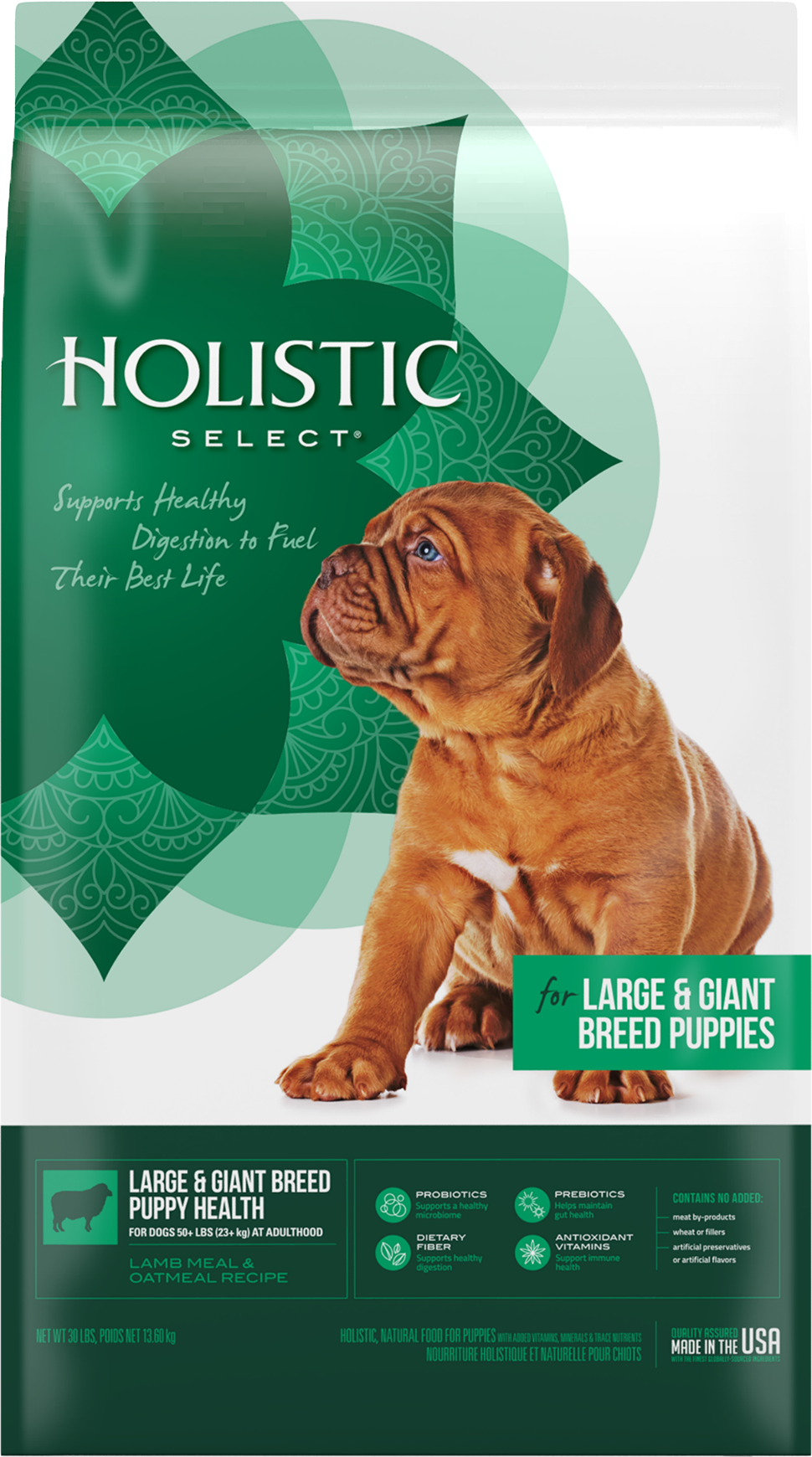
Credit: www.holisticselect.com
What To Look For In Large Breed Puppy Food
Choosing the right food goes beyond just picking a brand. Here’s what matters most for your puppy’s nutrition:
- Protein: Look for 22–32% protein from real meat. Too much can put stress on kidneys, but too little stunts growth.
- Fat: Ideal fat content is 8–15%. Supports energy without causing rapid weight gain.
- Calcium/Phosphorus: Aim for calcium around 1.0–1.3% and phosphorus 0.8–1.1%. This helps bones develop correctly.
- Calories: Food should provide about 350–420 kcal/cup. Overfeeding is a common mistake.
- DHA & Omega-3: Supports brain, eye, and coat health.
- Digestibility: Foods with prebiotics, probiotics, and quality grains support gut health.
Some brands also add glucosamine and chondroitin for joint support. This is especially helpful for breeds prone to hip or elbow issues.
Feeding Tips And Common Mistakes
Even the best food can cause problems if not fed properly. Here’s how to get it right:
- Feed by weight, not age: Large breed puppies grow at different rates. Follow the feeding guide on the bag, but adjust based on your puppy’s body condition.
- Split meals: Feed 2–3 small meals per day. Large meals can cause bloat or stomach upset.
- Avoid supplements: Extra calcium or vitamins may cause harm if the food is already balanced.
- Don’t switch foods too quickly: Transition slowly over 7–10 days to avoid diarrhea.
- Monitor growth: Healthy puppies should be lean, not chubby. You should feel the ribs but not see them.
Here’s a quick comparison of recommended feeding frequency and amounts by age:
| Puppy Age | Meals per Day | Daily Food (cups) |
|---|---|---|
| 2–4 months | 3–4 | 2.5–4 |
| 4–8 months | 3 | 3–5 |
| 8–18 months | 2–3 | 4–6 |

Credit: nulo.com
Non-obvious Insights For New Owners
Many new owners assume that bigger puppies need more food, but overfeeding is the most common mistake. Rapid growth can damage developing joints. Instead, focus on a steady body condition—not the number on the scale.
Another tip: not all “grain-free” foods are better. Some grains like brown rice or oatmeal can help digestion and energy. Only avoid grains if your puppy has a diagnosed allergy.
Also, some large breed puppies grow unevenly with growth spurts and slow periods. Don’t be alarmed if your puppy looks lanky sometimes—it’s normal.
When To Switch To Adult Food
Large breed puppies stay on puppy food longer than small breeds. Most should switch to adult food at 12–18 months, or when they reach about 80% of their adult weight. Switching too early can cause nutritional gaps.
Check with your vet to pick the best time based on your dog’s size and breed.

Credit: www.dogfoodadvisor.com
Frequently Asked Questions
When Should I Start Feeding My Puppy Large Breed Puppy Food?
Start as soon as you bring your puppy home, usually at 8 weeks. Early nutrition sets the stage for healthy growth and strong bones.
How Do I Know If My Puppy’s Food Is Causing Problems?
Signs include loose stools, itching, poor coat, or slow growth. If you see these, consult your vet and consider changing brands or formulas.
Can I Feed Homemade Food To My Large Breed Puppy?
It’s risky without expert advice. Homemade diets often lack balanced calcium and phosphorus. If you want to try, work with a veterinary nutritionist or use a recipe from a reliable source such as the World Small Animal Veterinary Association.
Is Wet Food Better Than Dry Food For Large Breed Puppies?
Both have benefits. Dry food is easy to store and helps clean teeth, while wet food is tasty and hydrating. Some owners mix both. Focus on nutritional balance more than type.
How Much Exercise Does A Large Breed Puppy Need?
Moderate activity is best. Too much running or jumping can stress growing joints. Short walks and gentle play are ideal until your puppy matures.
Choosing the best dog food for your large breed puppy is an investment in their future health. With the right nutrition, you’ll help your puppy grow into a strong, happy adult dog. Always watch their growth, talk to your vet about any concerns, and remember that every puppy is unique.